Showing posts with label WNI Guest Bloggers. Show all posts

Monday, July 14, 2014

The Joy of Prosody: The Joy of Rhyming!

By Liz Mastin


The Joy of Rhyming!

The poetic conversation has been “non-stop” concerning rhyme and whether it is passé in this day. However in his book Writing Metrical Poetry by William Baer, many famous poets have argued strongly in favor of rhyme, among these are poet George Santayana saying, “Like the orders of Greek Architecture, the sonnet or the couplet or the quatrain are better than anything else that has been devised to serve the same function; and the innate freedom of poets to hazard new forms does not abolish the freedom of all men to adopt the old ones.”

Edgar Allen Poe said, “Contenting myself with the certainty that music, in its various modes of meter, rhythm, and rhyme, is of so vast a moment in poetry as never to be wisely rejected – is so vitally important an adjunct, that he is simply silly who declines its assistance – I will not now pause to maintain its absolute essentiality.” Robert Frost stated:  “Writing free verse is like playing tennis with the net down.”

        A Little Poem
          Poems needn't rhyme
All of the time.
But if they do, 
                     That's okay too.  - Anonymous

Of course most of the famous English poets used rhyme and meter, among these Shakespeare, Pope and Donne, but times have changed greatly, and as always, unless rhymed poetry is done correctly it will fall under scrutiny! For instance, using what is called “forced rhyme” is considered particularly grievous, for a poet should not use a rhyming word “just” because it rhymes. The rhyming word should further the idea of the poem. It may mean adjusting a line’s phrasing to make the chosen idea-word work well for him.

Here are some types of rhymes taken from “Rhyme – Wikipedia, the free encyclopedia”:

Masculine: a rhyme in which the stress is on the final syllable of the words:
rhyme
sublime

Feminine: a rhyme in which the stress is on the second from the last syllable of the words:
picky
tricky

Syllabic: a rhyme in which the last syllable of each word sounds the same but does not necessarily contain stressed vowels:
Cleaver
Silver
 
Slant Rhyme (Imperfect – Near – half):  Slant rhyme, known also as half-rhyme or imperfect rhyme , refers to words that  have final matching consonants and almost rhyme (farm, yard) or appear to the eye to do so (said, paid). “Many poets use slant rhyme to introduce an element of the unexpected and prompt their readers to pay closer attention to words themselves rather than the sounds of words.”  Emily Dickinson, for example, pairs “soul” with “all” in one of her poems. She was a prominent pioneer  in slant rhyme.
*Slant rhymed words appear to be of one syllable.

Assonance: words (within a line) having matched vowels
 The horse coursed through the field.

Consonance: words having matching consonants
The robbers had rabies.

Semirhyme: a rhyme with an extra syllable on one word
Bend – ending

Weak Rhyme: A rhyme between a pair of one or more unstressed syllables. Unlike syllabic rhyme, the pair of words will contain differing numbers of syllables.
hammer – carpenter

Among those using rhyme and metrics today are rappers, songwriters, metrical poets, and there are those of us who enjoy writing both metrical and fee verse. In free verse, cadence takes the place of counting stresses (feet), and rhymes normally appear as internal rhyming, assonance, consonance and alliteration.

1. In the poem below: You will find syllabic rhyme in “dizzy” and “easy” in the first stanza; “breath” and “death” constituting a masculine rhyme.

2. In the second stanza, “pans” and “countenance” form an example of weak rhyme and “shelf” and “itself” form a semirhyme.

3. In the third stanza, “wrist” and “missed” is masculine and “knuckle” and “buckle” form a feminine rhyme.

4. In the fourth stanza, “head” and “bed” is masculine  and “dirt and “shirt” are also masculine.


My Papa’s Waltz
By Theodore Roethke

The whiskey on your breath
Could make a small boy dizzy;
But I hung on like death:
Such waltzing was not easy.

We romped until the pans
Slid from the kitchen shelf;
My mother’s countenance
Could not unfrown itself.

The hand that held my wrist
Was battered on one knuckle;
At every step you missed
My right ear scraped a buckle.

You beat time on my head
With a palm caked hard by dirt,
Then waltzed me off to bed
Still clinging to your shirt.


LIZ MASTIN BIO
Liz Mastin is a poet who lives in Coeur d’ Alene, Idaho during the summer and Bullhead City, Arizona in winter. She thrives on the study of the great poets, their biographies, the schools of poetry to which they adhered, and the poetic conventions of the times in which they lived.

While she enjoys free verse as well as metrical poetry, her main interest lies in prosody. She notices that most of the enduring poems are those we can remember and recite. Liz enjoys poetry forms such as the sonnet, the sestina, the couplet, blank verse, simple quatrains, etc. and she hopes to see modern poets regain interest in studied metrical poetry.

Liz is currently putting together her first collection of poems which should be completed this winter. The poems are a mixture of metrical and free verse poems.


Monday, June 9, 2014

The Joy of Prosody: Native American Poetry

By Liz Mastin

Native American Poetry
Path on the Rainbow
    
I had the pleasure of discovering Native American poetry almost eight years ago, when Coeur d’Alene’s “Rare and Used Bookstore” on Fourth Street was going out of business. I took advantage of the large inventory of marked-down volumes to stock up on some great books of poetry. 

One of the books I purchased was a very old copy of Path on the Rainbow by George W. Cronyn. A thick book with yellowing pages, it had a weathered black-leather cover and the title was stamped in crumbling gold leaf. The poems contained in the book had been gathered by Cronyn at a time when the colonists had just begun making journeys into America’s heartland and the Native American culture was, as yet, unchanged. I was so fortunate to happen upon this fascinating book as it inspired my interest in Native American poetry along with early Native American thought; the minds of those who lived in this country prior to the white man.

Themes covered in the book are various belief systems, fascinating myths, accounts of bravery, tribal traditions, harvest and hunting rituals, romance and love, etc. Many of the poems are songs or chants with repetitions used as a memory devise, enabling them to be passed on to successive generations. Poems in my book “Path on the Rainbow” were spoken or sung by (now unknown) poets and represent a variety of tribes. The book is available on Amazon.com and there a Kindle version available as well.

From Path on the Rainbow, I especially enjoyed this particular poem constructed almost entirely of metaphors!


Early Moon

The baby moon, a canoe, a silver canoe, sails and
Sails in the Indian West.

A ring of silver foxes, a mist of silver foxes, sit and sit around
The Indian moon.

One yellow star for a runner, and rows of blue stars for more
Runners, keep a line of watchers.

O foxes, baby moon, runners, you are the panel of memory;
fire-white writing tonight, of the Red man’s dreams.

Who squats, legs crossed, and arms folded, matching its look
Against the moon-face, the star-faces, of the West?

Who are the Mississippi Valley ghosts, of copper foreheads,
riding wiry ponies in the night? –no bridles, love arms on the
pony necks, riding in the night, a long old trail?

Why do they always come back when the silver foxes sit
Around the early moon, a silver papoose, in the Indian West?

According to a web site called “Indians.Org” If you should attempt to write a poem to mimic the tone of Native American poetry, you should remember to use the first person and mull over their deep personal thoughts about life, family, nature, etc. If possible, try and incorporate a life lesson into the poems general theme.

Liz Mastin Bio
Liz Mastin is a poet who lives in Coeur d’ Alene, Idaho during the summer and Bullhead City, Arizona in winter. She thrives on the study of the great poets, their biographies, the schools of poetry to which they adhered, and the poetic conventions of the times in which they lived.

While she enjoys free verse as well as metrical poetry, her main interest lies in prosody. She notices that most of the enduring poems are those we can remember and recite. Liz enjoys poetry forms such as the sonnet, the sestina, the couplet, blank verse, simple quatrains, etc. and she hopes to see modern poets regain interest in studied metrical poetry.

Liz is currently putting together her first collection of poems which should be completed soon. The poems are a mixture of metrical and free verse poems.


Monday, May 5, 2014

The Joy of Prosody: The Joy of Revision

By Liz Mastin


Revision – to see again. The process of changing something, especially a piece of writing, in order to improve it by correcting it or including new information or ideas.
Greetings fellow writers. My book of poems is nearly done! --- or so I thought. For, as it happens, completing a collection of poems can take a fairly long time, due to working on revisions. Having laid my poems aside for a time, I now more easily “see” previously “unseen” mistakes, and I am so glad I still have time to improve them further, before anchoring them permanently in a book. In this column, I am consulting articles on revision, written by Tony Morris, author of award winning book Fugue’s End, and literary educators Robert Gambell and MD Lynn, and prize winning poet Sandra Soli.  

According to Morris “The act of revising is probably the most important, and at the same time, the least utilized tool of beginning and veteran poets alike. Nevertheless, that second, third, or even fiftieth look at the poem is at the very heart of becoming a great poet.” He continues: “Poets as varied as T.S. Elliot, Robert Frost, Robert Penn Warren, and Mary Oliver are famous for producing poems through the act of multiple revisions. (Oliver has said that she usually revises through forty or fifty drafts of a poem before she begins to feel comfortable with it).”

“Whether the poem was written with ease, or whether it was written with much effort, it is usually still an unfinished piece of work that now needs your most conscious and honest appraisal.”  When you revise a poem, it is best to get away from the poem for awhile. Set it aside and return to it occasionally over the next few days, few weeks or even longer. Try to approach the poem as though you were not the writer, but the reader.

Among the many things one should consider when revising are:
1.       Does the energy of the poem go in the direction the poem wants you to go in? Have you listened to what the poem wants?
2.       Do clichés exist? If so eliminate them. You should be using unique and fresh language and thoughts.
3.       Does the voice of the poem remain consistent?
4.       Does the tone of the poem remain consistent?
5.      Is the poem overly punctuated? “An over abundance of punctuation causes the poem to be choppy and hard to read in any kind of flow.”
6.      Is the poem under punctuated? “Poems with very little or no punctuation makes it difficult to read and makes the reader have to pause while reading.”
7.       Are all of your words spelled correctly?
8.       Does the poem have cadence if it is free verse or if metered, is the meter consistent with the pattern determined for the poem?
9.      Does your poem tell a story of some kind? According to MD Lynn, “Poetry is a story told in verse form. It should have a plot of some sort that we can see. Use irony, metaphors, analogies – tell us a story and give us a good ending to our short word journey.”
10.   Have you chosen words for the poem that fit the emotion you want to convey?
11.   Have you remembered to consider “happiness, humor and fun” as also appropriate emotions for poems? “Good poetry doesn’t have to be esoteric and morose.”
12.   Does your poem make a reader feel something?
13.  Does the poem make sense? “Esoteric poetry is great, as long as the reader can get a sense of what you mean or can connect and find a meaning all their own. A poem that makes no sense and leaves the reader wondering, ‘What was that all about?’ is truly not good poetry”, according to MD Lynn.
14.   Is your diction striking and fresh, or drab and routine?
15.   Have you used active verbs and have you avoided using the passive voice too much?
16.   Have you considered using words with assonance, consonance, alliteration and/or internal rhyming?
17.   It is smart to put strong words at line-endings
18.   Make sure you can justify every adjective and adverb and use active verbs.
19.   Bringing your poem forward into the present tense adds immediacy and impact.
20.   Does your poem give the reader something to think about?
21.  Have you considered having the reader follow you but being careful not to be too predictable. “Don’t spoon feed the reader.”
22.  *According to Sandra Soli “Many poems can be improved by rewriting an obvious, easy ending.”
23.   Some poems need amputation if the poet goes on talking after the poem done.
24.   Don’t be afraid to toss out stanzas that do not add to the meaning of the poem. Also it is advisable to keep all of your old revisions, just in case you end up liking an earlier revision better than a later one.

Sandra Soli affirms: “Do not distrust revision.”

Here is a short ballad (I wrote quite quickly) while feeling inspired. Below is the first version and it is followed by a revision. I am not sure, but only hope it is better. I will keep the first version so I can possibly change it back if I should want to or, I could take the best lines from each version and create the poem that way.

Have fun revising!


Ballad of Walt the Wizard
Liz Mastin

Digging in the desert dirt,
With his pick and pan,
Lanky frame, skin fried brown,
Aureate nugget in his hand,

He greets all those who to his claim
Arrive with varying hope
“How are you? I’m Walt the Wizard.
I’ll show you folks the ropes.”

“There’s lots of gold here I am sure:”
He mentions Greece and Rome.
They watch his freighted trammel work;
He looks up from the ground:

“I don’t care if I should dig
And never find a thing!
That’s not the reason, nor only goal,
Just hear those mountains ring!

“If you’ll stand and meditate
You’ll soon see what I see:
Desert’s grandeur, endless skies –
Gold enough for me.”

First Revision
Digging in the desert sun,
Steel pick in his hand;
Lanky frame, skin bronzed brown,
Large nugget in his pan,

He greets all those who to the claim
Arrive with varying hopes:
“How are you? I’m Walt, the Wizard.
I’ll show you folks the ropes.

“There’s lots of gold here. That I know.”
He mentions Greece and Rome.
As they watch his trommel work
He scans the hills around:

“Now I don’t mind if I should dig
Yet never find a thing.
It’s not only for gold I search,
Just hear those mountains sing.

“Stand still now and meditate,
You’ll soon glean what I glean:
Desert grandeur, endless skies,
Gold enough for me.”  

Liz Mastin Bio
Liz Mastin is a poet who lives in Coeur d’ Alene, Idaho during the summer and Bullhead City, Arizona in winter. She thrives on the study of the great poets, their biographies, the schools of poetry to which they adhered, and the poetic conventions of the times in which they lived.

While she enjoys free verse as well as metrical poetry, her main interest lies in prosody. She notices that most of the enduring poems are those we can remember and recite. Liz enjoys poetry forms such as the sonnet, the sestina, the couplet, blank verse, simple quatrains, etc. and she hopes to see modern poets regain interest in studied metrical poetry.

Liz is currently putting together her first collection of poems which should be completed this winter. The poems are a mixture of metrical and free verse poems.


Monday, March 24, 2014

The Joy of Prosody: Writing the Sestina

By Liz Mastin


In the many books on how to write formal poetry, the “sestina” is often considered a complicated form; but in actuality it is not impossible to write, and I have written two of them. If I can write a sestina, you can write a sestina!  In sestinas, end words are repeated in a convoluted, spiraling pattern and one has the opportunity to change the meanings of the repeated words (for many words have more than one meaning).  The word “dog” at the end of one line which might read “How I miss the little dog”, might appear at the end of another line as “Do not my weary conscience dog!”

The sestina’s inventor, according to The making of a Poem, A Norton Anthology of Poetic Forms, was Arnaut Daniel, who belonged to a group of twelfth-century poets – the troubadours – who needed, for their fame and fortune, to shock, delight, and entertain!

The sestina does not rhyme as the repetitions stand in for the rhymes. In the sestina, elaborate repetitions manifest as one follows the prescribed formula.  The required pattern for the sestina is as follows:

1.       It is a poem of thirty-nine lines.
2.       It has six stanzas of six lines each.
3.       This is followed by an envoy of three lines
4.       All of these are unrhymed
5.       The same six end-words must occur in every stanza but in a changing order that follow a set pattern.
6.       This recurrent pattern of end-words is known as “lexical repetition”.
7.       Each stanza must follow on the last by taking a reversed pairing of the previous lines.
8.       The first line of the second stanza must pair its end-words with the last line of the first.  The second line of the first stanza must do this with the first line of the first and so on.
9.       The envoy (or last three lines) must gather up and deploy the six end words.

 Is easier to show how this works with a poem example. Many of the famous sestinas may seem complicated due to their more complex subject matter, so I think I will use my simple poem to show you how the repetitions works. Then I’ll add a serious sestina by a revered poet, Anthony Hecht.

Not the Place to Eat a Peach
                                     By Liz Mastin

Upon seeing a young family, on an off-ramp, eating peaches!


Not the place to eat a peach –
On the off-ramp from I-5!
Many speeding cars turn down there:
Logging trucks with lumbering weight.
Highways really are quite foolish:
Stopping only tempting fate.

One may not believe in fate,
But should you choose to eat a peach,
The Flying J would be less foolish,
Up ahead four miles or five.
It’s so much better that you wait –
And you’ll find great coffee there!

Tell your children “Now there there!
Soon you’ll have a nice sweet fate!
Please be patient; try to wait
And you’ll soon have your nice plump peach!
Traffic is intense at five;
To step out now is foolish, foolish!”

Flaunting danger’s always foolish.
Logging trucks which exit there,
On the off-ramp from I-5
Head for the mill; that is their fate.
It’s not worth it for a peach
And what I’m saying carries weight!

Speeding cars will never wait;
They’re always late so it is foolish
Dealing with a messy peach,
Taking chances. You know there –
Are some good reasons for ill fate.
Danger looms along I-5!

Beware all you who choose I-5
To eat a peach. You’d better wait.
You don’t want to meet cruel fate!
Move along and don’t be foolish.
I don’t want to see you dead there,
Damaged due to eating peaches.

 Sometimes something like a peach                                  
 Will brings about a foolish fate.
 Wait! Don’t eat there, on I-5.

NOTE: In writing my poem, I studied another sestina, and how the line-end-words were arranged.
Then, I numbered each stanza’s lines, and placed the correct end words at the end of each line and then begin to fill out the lines with some sensible (hopefully poetic) reasoning.

NOTE: In the first stanza, one is free to write whatever one pleases. From there is it only a matter of placing the end words in their proper order  in the following stanzas, according to the formula. It is a consistent pattern; “not” difficult once you get the hang-of-it.

Now here is a very “serious” sestina by a famous poet Anthony Hecht.

                  The Book of Yolek
                                      By Anthony Hecht

The dowsed coals fume and hiss after your meal
Of grilled brook trout, and you saunter off for a walk
Down the fern trail, it doesn’t matter where to,
Just so you’re weeks and worlds away from home
And among midsummer hills that have set up camp
In the deep bronze glories of declining day.

You remember, peacefully, an earlier day
In childhood, remember a quite specific meal:
A corn roast and bonfire in summer camp.
That summer you got lost on a Nature Walk;
More than you dared admit, you thought of home;
No one else knows where the mind wanders to.

The fifth of August, 1942.
It was morning and very hot.  It was the day
They came at dawn with rifles to The Home
For Jewish Children, cutting short the meal of
Of bread and soup, lining them up to walk
In close formation off to a special camp.


How often you have thought about that camp,
As though in some strange way you were driven to,
And about the children, and how they were made to walk,
Yolek, who had bad lungs, who wasn’t a day
Over five years old, commanded to leave his meal
And shamble between armed guards to his long home.

We’re approaching August again.  It will drive home
The regulation torments of that camp
Yolek was sent to, his small, unfinished meal,
The electric fences, the numeral tattoo,
The quite extraordinary heat of the day,
And the smell of smoke and the loudspeakers of the camp.
Wherever you are Yolek will be there too.
His unuttered name will interrupt your meal.

Prepare to receive him in your home some day.
Though they killed him in the camp they sent him to,
He will walk in as you are sitting down to a meal.

I hope you will try writing the sestina. It is not as hard as it might look and in fact is a very fun form.

Liz Mastin Bio
Liz Mastin is a poet who lives in Coeur d’ Alene, Idaho during the summer and Bullhead City, Arizona in winter. She thrives on the study of the great poets, their biographies, the schools of poetry to which they adhered, and the poetic conventions of the times in which they lived.

While she enjoys free verse as well as metrical poetry, her main interest lies in prosody. She notices that most of the enduring poems are those we can remember and recite. Liz enjoys poetry forms such as the sonnet, the sestina, the couplet, blank verse, simple quatrains, etc. and she hopes to see modern poets regain interest in studied metrical poetry.

Liz is currently putting together her first collection of poems which should be completed this winter. The poems are a mixture of metrical and free verse poems.


Wednesday, February 12, 2014

The Joy of Prosody: Walt Whitman: his influences


Walt Whitman: his influences

By Liz Mastin

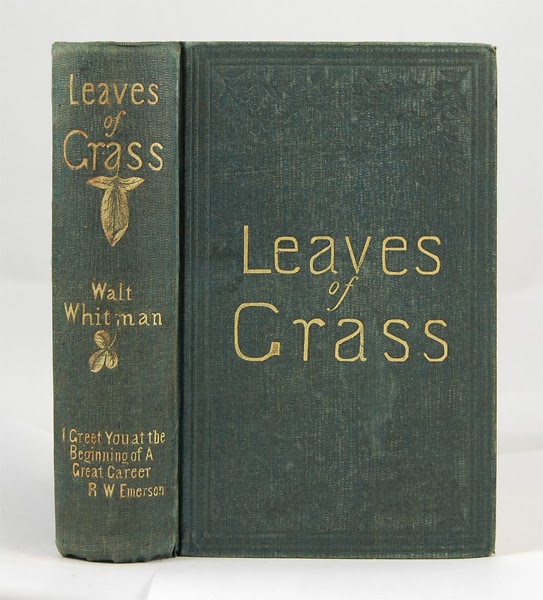
I believe when many people think of free verse, Walt Whitman and his revolutionary book celebrating America, (entitled) Leaves of Grass comes to mind. And just as individual “words” in our language are derived from some influencing sound, idea or thing, so Walt Whitman had his influences when generating his style of free-verse writing.

It was shortly after the Romantic period (a revolutionary time in itself, when poets left-off with requisite strict “iambic” lines and began including “substituted feet”) that the next new revolutionary era of “free verse” came into being. Samuel Taylor Coleridge played a large role in this poetic transformation when he originated the idea of poems having what he called an “organic form.” His new idea argued that the form of a poem grew out of the vitality of its content; the “argument” makes the “meter” instead of the meter being “a predetermined form” acting as a “constraint” on the content.

I believe a leaf of grass is no less than the journey work of the stars,
And the pismire is equally perfect, and a grain of sand, and the egg of the wren,
And the tree-toad is a chef-d'oeuvre for the highest,
And the running blackberry would adorn the parlors of heaven,
And the narrowest hinge in my hand puts to scorn all machinery,
And the cow crunching with depress'd head surpasses any statue,
And a mouse is miracle enough to stagger sextillions of infidels.
                                                                                               - Walt Whitman

And influenced by Coleridge, Ralph Waldo Emerson wrote an essay entitled “The Poet” which he read to the New York Societal Library in Manhattan on March 5, 1842.  Walt Whitman, only 23 years old, was in the audience when he heard Emerson declare: “I look in vain for the poet whom I describe….Our log-rolling, our stumps and their politics, our fisheries, our Negros and Indians, our boasts and reputations, the wrath of rogues and the pusillanimity of honest men, the northern trade, the southern planting, the western clearing, Oregon and Texas are yet unsung. Yet America is a poem in our eyes; its ample geography dazzles the imagination.”   

Upon hearing these words, Whitman said that the lecture was “one of the richest and most beautiful compositions, both for its matter and style, we have heard anywhere, at anytime.”  He added: “I was simmering, simmering, simmering.”
     
Thus, according to Stephen Dobyns, in his book Best Words, Best Order “Whitman became the first to use the idea of organic form as a reason for abandoning traditional meters altogether!” In developing the style of his poems, he was influenced by the rhythmical prose of essayists Emerson and Carlyle, and by the oratory of preachers he had heard during his childhood, specifically one Quaker preacher named Elias Hicks. According to Dobyns: “The form Whitman modified for his uses was the verset, which derives from the King James Version of the Bible, specifically The Song of Songs, Psalms, and The Prophets.  What replaces the metrical line is “the cadence” which is a symmetrical balancing of phrase units of similar lengths. The cadence often appears as an explanation and rationalization for free verse.
I am not blind to the worth of the wonderful gift of "LEAVES OF GRASS." I find it the most extraordinary piece of wit and wisdom that America has yet contributed. I am very happy in reading it, as great power makes us happy. It meets the demand I am always making of what seemed the sterile and stingy nature, as if too much handiwork, or too much lymph in the temperament, were making our western wits fat and mean.
I give you joy of your free and brave thought. I have great joy in it. I find incomparable things said incomparably well, as they must be. I find the courage of treatment which so delights us, and which large perception only can inspire. 
I greet you at the beginning of a great career, which yet must have had a long foreground somewhere, for such a start. I rubbed my eyes a little, to see if this sunbeam were no illusion; but the solid sense of the book is a sober certainty. It has the best merits, namely, of fortifying and encouraging … Excerpted from a letter Ralph Waldo Emerson sent to Whitman, thanking him for a copy of Leaves of Grass, July 21, 1855.
“Whitman’s enthusiasm and declamatory energy can be seen as influencing poets as diverse as Carl Sandburg, William Carlos Williams, Charles Olson, Frank O’Hara and Gertrude Stein.”

Whitman used poetic techniques such as assonance, alliteration, antithesis and parallelism, but he did not use enjambment and all his lines were end-stopped.  Algernon Swinburne, along with poet William Rosetti published the first version of Leaves of Grass in London in February, 1868.  


Sunday, July 14, 2013

Go Ahead, Camp With Kids (It'll Probably Be OK) by G. T. Rees


G. T. Rees and his son Steven at Sawtooth Lake
(We're happy to share this guest post from author G. T. Rees. Check out G. T.'s latest book, Protect Your Nuts, for a great summer read.)

     Last summer, when I took my then eight-year-old son on his first real backpacking trip along with two of his buddies and their dads, I fully expected trouble from the little twerps, and worked myself up to withstand a barrage of complaints. But low and behold, throughout our three-mile hike into the Cabinet Mountains east of Sandpoint, not one complaint of sore legs or boredom came out of their mouths the entire time. Even when the mosquitoes were exsanguinating us through clothing and head nets, my son and his buddies uttered nary a peep of dissent. They were too interested in racing each other up the trail, catching brook trout from the lake, and playing with the campfire to even mention iPods. I was shocked.
           Now it’s getting to be that time of year again in northern Idaho—the outside time of year. I love all the opportunities we have here to experience nature, and with the warming weather, my thoughts have begun to migrate toward what I’ll do with my kids over the fast-approaching summer break. After all, you’ve got to do something with the little skeabers or you’ll soon be counting the seconds until school starts back up and thinking about checking yourself into a mental rehab unit. A backpacking trip into the high country with my now nine-year-old son is definitely on the list. I’ll take my daughter, too, when she’s a bit older and doesn’t complain about sore legs after hiking a hundred yards. Her time’s coming. 
      I treasure the memories from my childhood of hiking and camping in the mountains with my parents: catching bright rainbow trout from alpine lakes using grasshoppers for bait, because I knocked the salmon eggs into the water and we didn’t have anything else to use; poking the campfire with charred sticks and watching the sparks rise into the night to merge with the stars; breathing mountain air so pure and crisp it seems alive. It’s a fact that campfire smoke indelibly prints memories into the brain, don’t know why exactly, but it does because I can vividly recall those childhood experiences as if they happened yesterday. I’m anxious to pass onto my son his own smoke-tinged memories of childhood camping, and last summer I put a great deal of thought into how I could arrange our trip to get him hooked. It wasn’t an easy challenge.
In Coeur d’Alene, we loaded up the truck of a friend and fellow dad with the three eight-year-old boys and their three dads. With the gear, it was a bit snug in the vehicle but the boys in the back kept things lively and no one minded the tight quarters. I don’t think either one of the other dads had ever been as far up into the mountains as I took them, and as we kept driving up and up, there was a bit of apprehension. Once you turn off the paved road, it is a good hour’s drive before you get to the trailhead for Black Tail Lake, where we were going.
When we reached the trailhead, I’ll admit that my misgivings were growing. It was a three-mile hike to the lake, mostly uphill, and despite our efforts to keep the loads light, the packs the kids were carrying looked about as big as them. I really wanted the boys to get the backcountry into their blood but despite my careful planning, I now wasn’t so sure how things would go. Earlier, I had reasoned that the trek was relatively short and up a well-maintained trail I had personally hiked the previous fall, and we were only staying out one night. Easy, I thought. But things did not go quite as I had planned.
The smooth trail of the previous fall was now littered with deadfall that had come down over the winter, some of debris chest-high on me, and whereas the mountains had been mostly bug-free the previous year, packs of ravenous mosquitoes now descended upon us with vigor. I swear the bloodthirsty insects were trying to carry us off, well, at least the boys. A bit of bug spray mostly kept the vampires off, except for one unfortunate kid who, despite the deet, had a face that looked like a lump of cookie dough the next morning. There always seems to be one the mosquitoes pick on. A little guiltily, I was glad it wasn’t me.
Despite the hardships, the boys took the challenges well and we made good time to the lake. I’ve noticed that often the best way to motivate my son is to include a few of his friends in whatever venture I’m trying to get him involved in. If it had just been the two of us, I can guarantee you there would have been ample complaints, mostly from him, but with his buddies along for a bit of camaraderie and competition, it was an entirely more positive experience.
Blacktail Lake is a beautiful little gem fixed high up the Cabinet Mountains with a grassy meadow on one side and a towering mountain slope on the other. We set up at a nice little campsite next to the lake. We put the boys to work collecting firewood, of which they brought in some, while we dads set up tents and unpacked gear. I tied a fly onto a line for my son and the boys were soon busy trying to catch the numerous brook trout in the lake. The trout in these backcountry lakes are small, but easy to catch with a dry fly and are a lot of fun for kids. I don’t know why exactly, but they don’t seem to like bait. However, you can spot a fish in the clear mountain water and drop a fly in front of it and get a hit nearly every time. The boys weren’t particularly skilled with a fly rod, but with a bit of help they managed to land half-a-dozen little brown fish before it got dark, and despite my son falling off a log into the water, they all had a great time. The hike back the following day was mostly downhill and the kids joked and laughed like the annoying eight-year-old boys they were. Despite the deadfall and clouds of mosquitoes, the trip was a success.
So, get on out there and make some memories of your own with your kids. If you don’t have a kid, borrow someone else’s. The parents will thank you for it. I can’t guarantee it, but it’ll probably be okay.
Recently, when I asked my son if he wanted to go backpacking again this summer he scrunched up his face, bounced up and down, and emphatically responded, “Yes. With friends. Somewhere we can go fishing.” I can’t help but get all warm and fuzzy on the inside with a response like that, assured now that my son’s future will hold a wealth of smoke-scented memories of time spent in the wild with his dad.

AUTHOR BIO: G. T. Rees's work has won multiple awards from the Idaho Writer’s League and been published in Idaho Magazine and Predator Xtreme, and Fish Alaska Magazine.