Showing posts with label contest. Show all posts

Friday, September 12, 2014

Guest Post from Brenda Drake

We are pleased to offer this guest post. Good luck to all brave participants.


#PitMad


#PitMad is a pitch party on Twitter where writers tweet a 140 character pitch for their completed manuscripts. Have several variations of your Twitter pitch available. Twitter may not let you tweet the same pitch over within the same hour. The pitch must include the hashtag #PitMad and the category (#YA, #MG, #A, #NA, #PB and #NF) in the tweet. The “#” is important to include. It will sort the categories to make it easier for the agents/publishers.
For more information about Twitter Pitching visit this post by agent Carly Watters here.
#YA = Young Adult
#MG = Middle Grade
#A = Adult
#NA = New Adult
#PB = Picture Book
#CB = Chapter Book
#NF = Non-fiction
#WF = Woman’s Fiction
#SFF = Science Fiction and Fantasy
#R = Romance
RULES:
The rules are simple. Everyone is welcome to pitch. All genres/categories are welcomed. Must be completed and polished manuscripts. You can pitch more than one manuscript. Throughout the day tweet your pitch. Try not to do it too much (rule of thumb is twice per hour per manuscript). When you see an industry professional on the feed, tweet it once. Make sure to include the hashtag #PitMad and your genre/category (if you can fit it).
The agents/publishers will tweet their submission preferences and favorite your tweet if they want to see more. If you get a favorite from an agent or publisher, follow their submission preference and send them their request as soon as you can. They should have tweeted what they want you to send, so check their twitter feed for that information. If they haven’t listed it, follow their submission guidelines on their websites. Make sure to put “PitMad Request: TITLE” in the subject line of your email when sending your request.
Don’t tweet agents and publishers directly unless they tweet you first.
Don’t favorite friends tweets. The agents will be requesting by favoriting tweets. so let’s keep that for requests. You can RT your friends to show your support.
Please keep in mind, we never know what agents or publishers will be on the hashtag, so make sure you research each requesting agent or publisher. You do not have to send requests to those requesting if you don’t want to work with them.
If you can’t be there, you can always schedule your tweets by using Tweetdeck or some other application that schedules tweets.
And finally, be nice and courteous to each other, and especially to the industry professionals. We’ve had some success stories come out of our previous #PitMads and we’d hate to have it canceled due to abuse. If you do see abuse, please report it to Twitter or notify one of the hosts of the event. Thank you!

Here’s the dates for our upcoming quarterly #PitMad events:
September 9, 2014
December 4, 2014
March 11, 2015
June 4, 2015
September 10, 2015
December 4, 2015
#PitMad starts at 8AM and ends at 8PM (EST or EDT, which is New York time).


About Me

I write young adult and middle grade novels. I'm represented by Peter Knapp at Park Literary. Look for my debut young adult novel, LIBRARY JUMPE

Wednesday, November 13, 2013

Math Phobia, or My Worst New Year's Resolution Ever.


Blame it on Barbie.

Do you remember when toymaker Mattel created a minor scandal by equipping a talking Barbie doll with the recorded comment, "I hate math. Math is hard."? Equal-rights proponents, especially those eager to see an increased number of women pursuing STEM careers (Science, Technology, Engineering, and Math) raised such a hue and cry over this demoralizing influence on young girls that the offending statement was swiftly banished from Barbie's vocabulary--replaced, one assumes, by something far more innocuous, like "I love tiny pink plastic shoes" or "I have physical proportions not found in nature."

The thing was, I didn't quite see what the fuss was about. After all, I too hate math. Whatever qualities make for a good math mind, I have the opposite. Even the simplest calculations tend to make my brain fog over. For a reasonably smart person, I have a capital-D Deficiency when it comes to numbers. I explain this away by claiming to be a "words" person, not a "numbers" person. (And right now you're muttering that that's a cop-out if ever you heard one. Am I right?)

Somehow I skimmed through high school and college by meeting only the bare-minimum math requirements. Since then, calculators and spreadsheet programs have allowed me to limp along in the real world, to some extent.

Which brings me to the point of this post (yes, there is one):  My Worst New Year's Resolution Ever, the year I decided to teach myself math in a misguided effort to overcome the shame and dread of story problems involving trains leaving this station and that station, and the eternal fruitless quest for X.

And so, thought I, what better way to spend cold, dark winter evenings than plumbing the depths of arithmetic, algebra, even (gulp) geometry? Visions of calculus danced in my head. Just pull out a textbook and begin at the beginning. It should have been simple, right?

Dear reader, I barely made it past chapter one in the textbook. I yawned. I balked. I fogged. Every bad memory I had of math class came rushing back to me, full force. After a halfhearted attempt or two, I dreaded even cracking open the book. And with no teacher holding me accountable, I didn't.
So on top of my epic failure to understand math in school, I have now added a epic failure to stick to a New Year's resolution meant to overcome the first epic failure. Two epic failures for the price of one!

What was your worst New Year's resolution? Or your best one? Write it up and submit it to our Best/Worst New Year's Resolution contest. If you never make resolutions, tell us why you don't. We'd love to hear from you, and you might even win a prize! Details are on our Contests page.

In the meantime, I've been eying an online course in Basic Math. Hope springs eternal. Maybe having an instructor to guide me will help it all make sense, instead of trying to figure it out on my own.

Maybe. But don't hold me accountable.

Tuesday, June 18, 2013

Who Loves Short Shorts?


 We are pleased to offer this guest post by, Lila Bolme


I love short shorts.
No, I'm not talking about clothes, I'm talking about stories – like WNI's short, short story contest – "A Picture is Worth 500 Words".
But squeezing a story into a five hundred word manuscript is a little like shimmying into a pair of short shorts:
  • You have to be bold
  • You have to be lean
  • You have to be careful how you move


It can also make you a better writer.
Last year, WNI offered a contest to write a short mystery, just six sentences long. That's about as short as you can get. I wondered if I could do it. I didn't plan to submit – but I did.
It turned out to be an incredible writing experience.
So how do writers go about writing something so short? Here's the process I went through to develop that contest entry. (My thoughts during the process are in italics.)

Put Both Feet In

I started with basic questions:
  1. What does a story need, to make it a story?
A protagonist and a problem. An antagonist would be nice, but no sense setting the bar too high at the start.
  1. Who is my protagonist?
A guy. Yup, I only had a picture in my head - a drunk in a trunk. I had just watched Water for Elephants.
  1. What's the character's problem?
He's drunk.

Shimmy, Shimmy

  1. But I need a mystery.
A drunk man is no mystery. How about a drunk woman?
Voila – I had a drunk woman.
Then I remembered some writing advice I read somewhere that said – throw your protagonist off a cliff.
So I did.
Presto! I had a drunk woman falling off a cliff.
  1. How did she get there?
Kidnapped...Skiing...hmmm...OK, maybe she doesn't fall off a cliff, maybe she falls off a train...an elephant...her bed – Her bed (lots of giggling) Wait – To a drunk with bed spins, falling off a bed might seem like falling off a cliff.
Now I have a drunk woman falling off her bed.
That's not a mystery but...what if I don't tell the reader she's drunk till the end. Ta Da! Wait – Is that a mystery? I knew I should have looked that up. OK, what if I don't tell the reader she's drunk till the end AND I don't tell the reader it's a bed that she falls off of, until the end? – SHA-BAM!
That was my story kernel.

Work It

Time to get the story moving, but short, shorts only cover so much. I needed a plan.
Here's how I laid it out:
  • Sentence 1 & 2 - Introduce the character and the problem.
  • Sentence 3 & 4 - Make the problem huge and the character struggle .
  • Sentence 5 & 6 - Let the character win or lose and reveal the mystery.


Squeezing into the story limits forced me to drop flab and muscle up my words. I started with my character already in crisis. The character struggled, then lost, revealing the mystery.
What I Learned:
Everything that I thought was a limitation, actually helped me write better.
  • Each sentence had a specific job.
  • The conflict had to be inflated immediately.
  • Every word had to be deliberate.


I challenge you to enter this contest. Try some short shorts for yourself. Who knows? You might decide you love them too.
If you like, you can see how my Six-Sentence Mystery, turned out, right here on Writing North Idaho.

                                                                *


Friday, June 7, 2013

Somewhere in Time...


I recently came across some valuable advice regarding the writing of historical fiction. The cautionary note indicated that the writer should not get lost in the research.  Luckily for me, I am one of those people who like the process of creating something; the journey is fun and I do not really want to get to my destination. This may explain why I often sit in my car in the driveway when I am returning home from a trip to the market. History should never be top heavy in the story; it should be there, but not in the way. What we want to see is how the characters react to the changing times, not to read about every last parliamentary procedure, or tiresome debate in the Senate. We need to have a light hand with that ingredient, yet it is just as important as butter is to a good batch of shortbread cookies.One fantasizes about writing the definitive work, and the writer wants to know every single last significant detail about the time, but then it has to be as a thick, velvet curtain at the back of the stage.

When I set out to write a story set in 1630, I  wanted to capture, for myself most of all, what it would have been like to live in back in Boston when Europeans were new to the continent.  I read everything written on the subject and then some. Due to the fact that my characters traveled back to England in the midst of the civil war, I had to cover that as well. Once I began to grasp the enormity of losing every safeguard put in place, and seeing England fall into a military dictatorship, I did want to cover it in great detail. Too much history came the response from my first readers, and so I had to chop and chop. Still, the story of the struggle remains.

While I am not a big reader of the genre known as historical fiction, I do love reading a gripping tale when I feel as if I have been transported to another place and time. To me, that is the key.

Last evening, we set out in the boat from our dock here at the southern end of Lake Coeur d' Alene. Given that we were after hours to some degree, and needed to fill up on gas, we decided to try the town of Harrison. Having always been a fan of the place, I was happy to go over and take our chances. We were told to go up to the bar and find the man who could help us. It gave me time, while standing and holding the boat, to think.

 Harrison has all the makings of a place that time forgot. Handsome brick buildings suggest that it was a town on its way to becoming a small city back in 1890, when a branch of the O.R. And N. railroad put in a stop. A large sawmill, moved up from St.Maries, meant that a substantial operation had begun. However, a large fire broke out at the same mill, in 1917, and  destroyed most of the town. When the steamships discontinued service, they were all but cut off and the town ended up having a different future. It is one of those places, where when looking at it from the water, you sense that you knew what it was like to live there one hundred years ago. As I stood on the dock,  waiting for my husband to return from One Shot Charlies, the bar where the man who could pump the gas happened to be visiting, I thought of potential stories regarding the town and how I always feel that way when I am there.

An enchanted place can often spark the impetus to write historical fiction. Those wanting to know more about the era, will often be drawn to the story.

In the movie, Somewhere in Time, the late Christopher Reeve plays a man who being stumped in his efforts at writing, decides to take a small trip and travel to the famous Grand Hotel on Mackinac Island, Michigan.  Once there, he becomes, captivated and obsessed regarding a photograph in the lobby. Desperate to know the hotel in its hey day and perhaps meet the person capturing his imagination, he accomplishes time travel and returns to 1917.  Of course, this is a metaphor for all writers and are we not lucky, that we have an imagination and picture what that may be like.

Time is running out to enter our contest here at writingnorthidaho. For details, read all about it in the sidebar.A picture can inspire 500 words.


Friday, May 17, 2013

Writing a Short, Short, Short, Short Story

Writing North Idaho is sponsoring another contest with a new element. Not only are prizes awarded, but also entrants will receive written critiques of their stories from our professional judges.

Write a short story based on this picture. It can be a comedy, a tragedy or a moment in time.
The contest theme is "A Picture is Worth 500 Words."

Tips for Writing a Short Story

1. Plot should be simple. Create conflict and resolve it. As per any story, write a beginning, middle and ending. Write an interesting story that engages the readers and gives them a satisfactory ending.

2. Limit the number of characters.

3. Choose a point of view.

4. Choose the setting (inside the house, outside, from across the street, from a photo album, or...).

5. Write the first draft without worrying too much about the word count. In the rewrite, look for sentences that are too wordy. Analyze whether you have too many characters. Does the story starts too early leaving little room for the "meat?" Do you need to eliminate some topic? Is there too much development or dialogue?

6. Write a catchy first paragraph or a sentence with a good "hook" to get the reader interested immediately.

7. Vary the length of the sentences.

8. Try using one or some of the five senses: taste, sight, touch, hearing and smell. 

9. Choose strong words; write using few adjectives and fewer adverbs.

10. Keep in mind that you are to provide a direct, brief story from which the reader gleans something---a laugh, a tear, a memory, a "wonder what I would have done" ending, or some other emotion.

Look at the upper right section of this blog for "WNI Contests" and click on it for contest details. The contest ends June 21, 2013 at midnight. Good luck!


Sunday, May 12, 2013

Writing Contest for you!

Writing North Idaho is sponsoring another writing contest: A Picture is Worth 500 Words. Entry is free and prizes are awarded. For the first time, writers will be given written feedback on their entries from professional writers. Entries will be published in this blog if you consent. Writing five hundred words is easy especially when you have a great picture as inspiration. The contest ends at midnight June 21, 2013. Three prizes will be awarded.

Please go here to read entry rules:  http://writingnorthidaho.blogspot.com/p/wni-contests.html


 Contests are excellent ways to improve your writing and add substance to your platform. With a written critique added, you will benefit from professional assessment of your story. Good luck!

Happy Mother's Day!

Friday, December 7, 2012

Do You Have THE Passion For Writing?

We are delighted to have as our guest blogger today Faye Higbee. Faye  is retired from the Coeur d’Alene Police Support Services Division in North Idaho. She is the current President of the Coeur d’Alene Chapter of Idaho Writer’s League, and an author of both Christian and secular books and articles. She lives in Post Falls with her husband Myron.


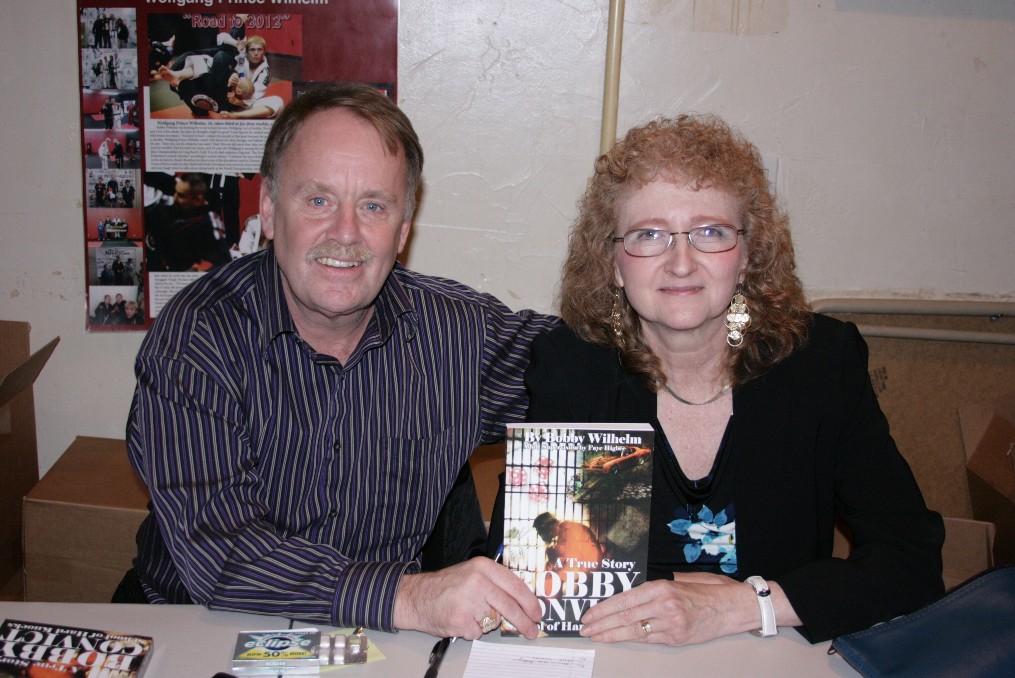
Current  books include: Bobby Convict, School of Hard Knocks with Bobby Wilhelm; Whispers of Heaven, a 90 day devotional with Rosalie Storment; The Dog Paw Chronicles (her autobiography); and Night Games, a novel under her pen name C.J. Ravenscroft. She also has stories in the following anthologies: Guideposts books- “Miracles of Nature,” “Miracles and Animals;” Harrison House books- “Extraordinary Miracles in the Lives of Ordinary People,” and “Miracles Still Happen.” Faye is not only an excellent writer but also a wonderful, enthusiastic person who exhibits passion for life as well as for writing. Thanks, Faye, for writing today's post!

      Faye Higbee and co-author Bobby Wilhelm at a recent book signing.


Do you have hot flashes when you write?  If you don’t, I suggest you might not be writing to your full potential. No, it’s not about menopausal hot flashes. I’m talking about passion and intensity that translates to power in your writing.

Whether we write novels or nonfiction, if we don’t have a depth of feeling about our topics, our batteries run low and barely work at all. We can learn anything, but if we don’t feel anything, nothing exciting or interesting comes out of our fingers. There is no true creativity if our batteries aren’t making connection.

Joanna Penn wrote this in her blog “The Creative Pen” back in August of 2012: 

"Identify your passions

I’m not talking about identifying plain old strengths here. Knowing our strengths and writing to them is beneficial, but going beyond them to what really makes us tick deepens the magic. Often, our strengths and passions intersect, but not always.
With my background in education, I can write out some serious kick-butt lesson plans. I’ve been trained to write them. I’ve practiced writing them. I’ve even taught from them. The problem is I hate writing lesson plans. I’d much rather indulge in the passion that enticed me into the teaching field to begin with: children’s literature.
When I finished college, I was given some really bad advice: hold off on that novel and assemble a portfolio. What followed were some really rotten years. Did I sell some articles? Yes. Did I improve my skills? Yes. Was I using my strengths? Yes. But it was sort of like writing out lesson plans. I wasn’t having any fun. So nine years ago, I scrapped the portfolio and penned my first children’s novel. Wow! Finally, I wanted to write! Lesson learned: Passion fuels our writing.”


People told me there would be no chance whatsoever of me getting published until I “established” myself. I don’t know how to tell those people that I got published numerous times with no portfolio. Then there were the people who told me that I couldn’t write about anything I didn’t know about. But I have always written about things that matter to my heart on a “hot flash” level. Hear this: if you feel strongly about a topic, you can write about it. Research, interviewing, and hard work are the keys: if you have the passion, you can pursue your dream. Whether you self-publish or find a publisher to take your work, you can do it when you write from that intensity of heart.

I recently finished a book with a partner who was once a high level drug kingpin.  Did I know anything about being a drug trafficker? No. I did have some law enforcement background, but nothing that prepared me for the depth of depravity in his life. Did I learn anything? Everything I never wanted to know about the consequences of drugs.

The passion? Interviewing people, touching their lives for good, believing that someone who was once a very bad person had changed his life.  He was no longer a drug dealer, and my own life was transformed by working on his story. Suddenly I felt alive and excited to get out of bed every morning.  I thought, “Who will I meet today?”   “What’s the next chapter?” Like the Eveready Battery Bunny, my own batteries were recharged by the passion of doing something fresh and new. I found “hot flashes” in my writing…the intensity of caring about the subject matter and people involved put power in the words. Like jumper cables attached to my brain, the message suddenly mattered more than the obstacles. Controversy swirls around the book “Bobby Convict,” but whether people don’t believe my partner, or they think I’m wacko for writing the book with him, I had great joy doing it.

Do you have “hot flashes” in your work? Do you get up every day excited to write? Let putting pen to paper be f.u.n. and fill your life with excitement. Don’t let others put you in a box, and write from that place of passion inside your heart. Now grab that pen, plug in your keyboard, get out there and write!


Today, December 7, is recognized in America as Pearl Harbor Day. We remember soldiers and sailors who fought bravely for what they believed in and to protect our freedoms. Today is also national Letter Writing Day. It does not have the status or gravitas of Pearl Harbor Day but it does remind us to take up pen and paper and write to someone who has touched our lives and made it better. It is a time to say thank you or I remember when or recount an activity enjoyed with a family member or friend. You can bring joy into someone's life by remembering to acknowledge a memory shared with another person. Writing a letter will make you both feel good.

Today is also the day to write a story of a holiday that was special to you. Enter Writing North Idaho's Holiday Reflections contest. See the upper left part of this blog page and the article below explaining the submission rules. Come on....you can write 500 words and win a prize!

Monday, June 11, 2012

How to Write Haiku

Writing North Idaho is currently running a haiku poetry contest. Deadline is June 15. Prizes available. How to enter is on the sidebar in the upper left. We would love to read your poems!

Haiku is an ancient form of Japanese poetry. It generally consists of three lines. The first line has 5 syllables (not words), the second line has seven syllables, and the last line has five. If you read the English translation of great Japanese haiku poets, you will not find this rhythm because of the differences in languages but the essence that goes along with the feeling of haiku is there.

How to write haiku by Jenny Hudock
1. Focus on nature and seasonal imagery (usually).
2. Made up of three lines
3. Lines traditionally follow a 5, 7, 5 beat pattern.
4. Add a reflective pause.
5. Avoid rhyme.
6. Invoke the senses.
7. Show don't tell.
8. Read haiku poetry, it helps.

Japanese poet Bunson
The sea at springtime.
All day it rises and falls,
yes, rises and falls.


Concept of America by Udiah
People united
To secure their liberty
Out of many, one


By Oshima Ryota
from the long hallways
rows of people rise
in the morning haze


Sunflowers by Helina Basic
Sunflower grow tall
Lift your head to bright sunshine
Mother Nature's child


Butterflies by Helina Basic
Flutter in the sky
On wings of many colors
Land upon flowers